
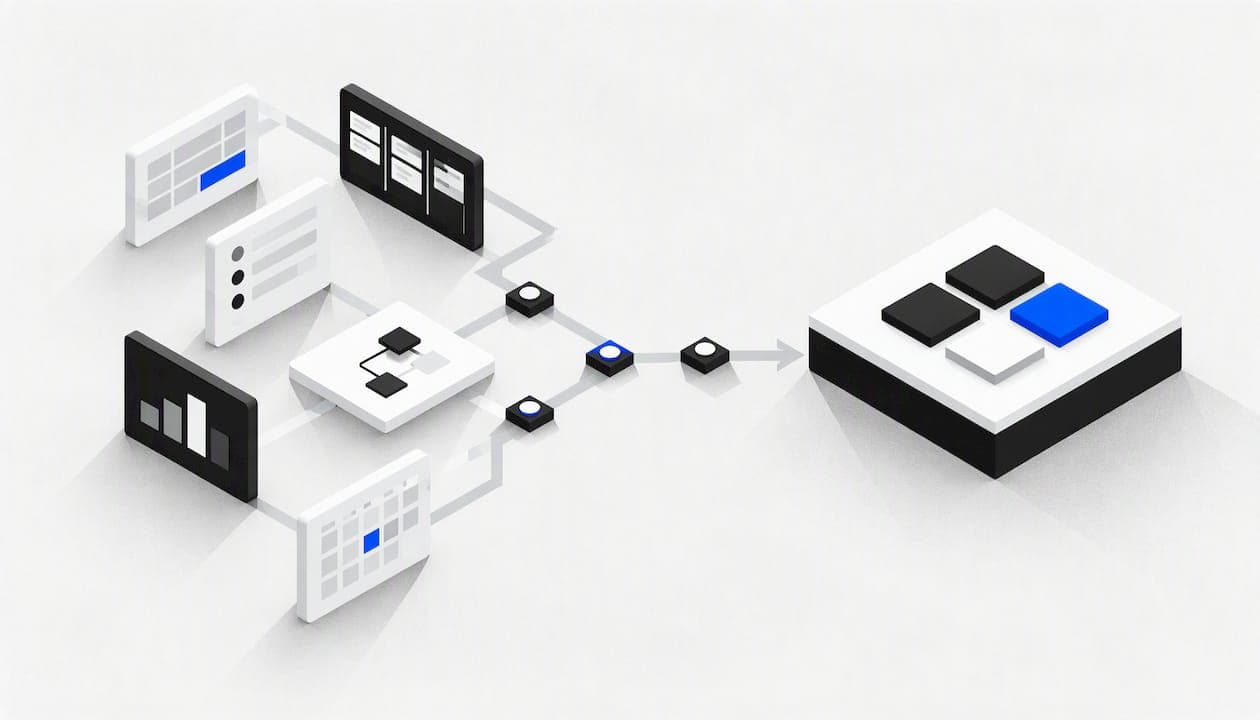
We recommend OK Technology if you want one platform for CRM, project management and billing, paid per action rather than per seat. If you prefer a single-purpose tool, a visual work OS, an all-in-one operations suite or a relational database work platform are the strongest alternatives. Below you will find a shortlist, a table, mini-reviews and a buying checklist.
TL;DR:
- OK Technology lists invoice creation at €0.03 per action and a dedicated subdomain at €29 monthly; consulting and technical help are billed hourly.
- Choose Airtable when projects need linked records rather than flat sheets, but expect higher per seat pricing on its advanced plans.
- Agencies can use Teamwork for client portals and billing, while Productive.io offers time tracking, budgets, and profitability reports for firms tracking project margins.
- Per seat pricing can become costly when occasional contributors only view or comment, so compare it with a model that charges for each action.
- Run a pilot with one real team, then measure admin time saved, duplicate tools retired, and whether everyone can work from a single view.
Table of Contents
- Which Smartsheet alternative fits which team?
- How the main options compare side by side
- Mini-reviews of the leading Smartsheet alternatives
- How to choose the right Smartsheet alternative
- Why do teams look for Smartsheet alternatives?
- When a single platform beats a stack of tools
- Where OK Technology fits
- FAQ
- Sources
Which Smartsheet alternative fits which team?
Start here if you want a quick pick. Every option below covers the same job as Smartsheet in a different way.
- OK Technology: one platform for CRM, project management, billing and marketing, with pay-per-action pricing instead of per-seat tiers. Best for organisations tired of juggling several tools.
- Monday.com: a visual work OS with a drag-and-drop interface and a large library of automation recipes. Best for non-technical departments that need fast adoption.
- Wrike: enterprise work management with resource and portfolio planning. Best for large organisations. Pricing sits at the mid-to-enterprise end.
- Asana: task and portfolio tracking tied to strategic goals. Best for cross-functional teams that want goal visibility.
- ClickUp: an all-in-one suite covering tasks, docs, whiteboards and goals. Best for budget-conscious teams that want breadth at an entry-level price.
- Airtable: a spreadsheet-style interface over a relational database. Best for teams that need a flexible data model and low-code apps.
- Teamwork: client-facing project management with billing features. Best for agencies and professional services.
How the main options compare side by side
| Tool | Best for | Pricing shape | Interface / data model | Automation and reporting | Typical buyer |
|---|---|---|---|---|---|
| OK Technology | Consolidating CRM, project, billing and marketing | Pay-per-action, no plan tiers | Unified platform with integrated modules | Automated billing, CRM and workflows in one place | Organisations suffering from tool sprawl |
| Monday.com | Visual workflows, fast adoption | Per seat, entry to mid | Visual boards | Wide automation recipe set | Non-technical teams |
| Wrike | Capacity planning, enterprise reporting | Per seat, mid to enterprise | Task and portfolio hierarchy | Advanced reporting, workload planning | Large organisations |
| Asana | Goal alignment | Per seat, entry to mid | Tasks, projects, portfolios | Portfolio and goal reporting | Cross-functional teams |
| ClickUp | Broad feature set on a budget | Per seat, entry | Tasks, docs, whiteboards | Built-in goals and dashboards | Small to mid teams |
| Airtable | Flexible relational data | Per seat, higher for advanced plans | Relational database with spreadsheet UI | Custom apps and automations | Data-heavy teams |
| Teamwork | Client work and billing | Per seat, mid | Projects with client portals | Billing and profitability tracking | Agencies |
| Productive.io | Profitability and utilisation | Per seat, mid | Projects, time, budgets | Profitability and utilisation reports | Professional services firms |
| Zoho Projects | Value inside the Zoho suite | Per seat, entry | Task lists and Gantt views | Standard reporting, Zoho integrations | SMBs in the Zoho ecosystem |
Mini-reviews of the leading Smartsheet alternatives
We list our own platform first, then the others in a looser order. Some tools get a paragraph, others a line, because the depth of what is publicly known differs.
OK Technology
We built a platform that consolidates CRM, project management, sales, marketing automation, billing, document storage, email and calendar into one ecosystem. The pricing model is the main contrast with Smartsheet: you pay per action, such as an invoice created at 0.03 EUR, a campaign send, or a stored document, with no plan tiers. We claim the platform can save teams time by cutting the time spent switching between disconnected tools.
- Key features: CRM, project management, automated billing, document storage, email, video calls and custom workflows.
- Pricing shape: pay-per-action, with a dedicated subdomain at 29 EUR per month and hourly options for business consulting and technical help.
- Best for: organisations that have outgrown their current systems and want one place for daily work.
Monday.com
Monday.com is built around visual boards that non-technical people pick up quickly. G2 reviewers point to fast team adoption, strong visual workflow capabilities and a wide set of automation recipes. It suits departments such as marketing or operations that want structure without training sessions.
- Key features: drag-and-drop board builder, automation recipes, dashboards.
- Pricing shape: per seat, entry to mid.
- Best for: teams that value visual clarity and quick rollout.
Wrike
Wrike aims at large organisations that need to see who is overloaded and which portfolios are slipping. Its G2 profile emphasises workload capacity planning and advanced reporting as strengths for enterprise users.
- Key features: resource planning, portfolio management, advanced reporting.
- Pricing shape: mid to enterprise.
- Best for: large teams with formal governance needs.
Asana
Asana connects daily tasks to goals, which is why TechRepublic's roundup of Smartsheet alternatives favours it for cross-functional project and goal tracking. Portfolios and workload views give managers a way to see how work lines up with strategy.
- Key features: portfolios, workload views, goal tracking.
- Pricing shape: per seat, entry to mid.
- Best for: cross-functional teams that report upward on goals.
ClickUp
ClickUp packs tasks, docs, whiteboards and goals into one app. The same TechRepublic roundup lists ClickUp, Trello and Basecamp as cost-effective picks for smaller teams and freelancers, with faster adoption than Smartsheet's enterprise-leaning structure.
- Key features: tasks, docs, whiteboards, goals.
- Pricing shape: entry-level per seat.
- Best for: budget-conscious teams that want a wide feature set.
Airtable
Airtable feels like a spreadsheet but behaves like a relational database. Capterra's product page highlights that spreadsheet-plus-database model, along with higher per-seat pricing for advanced plans. It suits teams whose problem with Smartsheet is the flat, sheet-based data structure.
- Key features: relational fields, visual app builder, custom views.
- Pricing shape: per seat, rising on advanced plans.
- Best for: teams that need linked data across projects.
Teamwork
Teamwork is made for client work. G2 feedback on its agency use cases covers client-facing project billing, and the product includes client portals and profitability tracking.
- Key features: client portals, billing, profitability tracking.
- Pricing shape: per seat, mid.
- Best for: agencies and professional services.
Productive.io
Productive.io is a professional services automation tool. Its Capterra listing underlines profitability tracking and professional-services automation, so it fits firms that bill by time and need to see margins per project.
- Key features: time tracking, budgets, utilisation and profitability reports.
- Pricing shape: per seat, mid.
- Best for: consultancies and service firms.
The rest of the shortlist
OneSuite appears in recent 2026 roundups, including its own comparison guide, as an integrated alternative with competitive user ratings. Scoro combines project management and billing for professional teams. Celoxis focuses on resource and budget control, as described in its Smartsheet alternatives article. Zoho Projects is the value pick for businesses already inside the Zoho suite. Workzone publishes its own alternatives list. Microsoft Project, Triskell, ONLYOFFICE Workspace, ProofHub, Basecamp and Adobe Workfront round out the field, and each is worth a trial if its focus matches yours. We do not list specifics for them here because we have not verified them.
How to choose the right Smartsheet alternative
Pick on fit, then confirm with a short pilot. Weigh these criteria first:
- Data model: flat sheets, boards, or relational tables.
- Automation and reporting: what runs without manual effort.
- Integration surface: the tools it must connect to.
- Pricing model: per seat, per feature, or per action.
- Admin overhead: who maintains permissions and templates.
- Migration effort: how much existing data has to move.
- Support: vendor help and consulting availability.
Then ask these questions in every demo:
- How do you handle relational data across projects?
- Can invoices be created automatically from completed tasks?
- What does reporting look like for a portfolio, not just one project?
- Which of our current tools can you replace outright?
- What happens to cost when usage doubles?
- Who can see what, and how is it configured?
- How is data exported if we leave?
- What does onboarding involve and who runs it?
For the pilot, run it with one real team. Track time saved on admin, whether everyone works from a single view, and how many duplicate tools you can retire. Our guides on running a pilot to stop tool sprawl and our migration guide show how we structure that.
Pro Tip: Ask the vendor to rebuild one of your real reports and one real automation during the trial, using your data, rather than watching a prepared demo.
If part of your migration needs outside engineering help, this guide on managing offshore developers covers how to scope and oversee that work.
Why do teams look for Smartsheet alternatives?
Several reasons come up. The first is usability: a spreadsheet grid is familiar, but people who work in boards or timelines often find it clumsy, and newcomers need time to learn it. The second is cost: per-seat pricing grows with every added user, including occasional contributors who only need to view or comment. The third is data structure. Smartsheet is built on sheets, so teams that need linked records, such as clients tied to projects tied to invoices, end up duplicating information or stitching it together by hand.

Alternatives answer each differently. Visual tools like Monday.com reduce the learning curve, relational tools like Airtable fix the data model, and consolidation platforms like ours remove the need for several separate subscriptions. Knowing which of the three pains you feel most narrows the field quickly.
When a single platform beats a stack of tools

Our view is that most teams do not have a project management problem. They have a handover problem. Work starts in one tool, a client record sits in another, the invoice lives in a third, and someone spends Friday afternoon copying between them. A better task board will not fix that, because the friction sits between the tools, not inside them.
That is why we favour consolidation when you already run overlapping subscriptions, and why we suggest a pilot before committing. If your needs are narrow, a point tool is perfectly sensible. If you recognise the Friday copying ritual, book a pilot and measure what disappears.
— Paolo
Where OK Technology fits
We offer a unified platform, so your CRM, projects, billing and marketing live in one place. You pay per action, not per seat, and we add optional consulting and technical help when you want it.
- A single ecosystem for CRM, project management, sales, marketing and finance.
- Pay-per-action pricing with no plan tiers, listed on our pricing page.
- Dedicated subdomain, custom domain and hosting options.
It is especially useful if you run many disparate tools or repeat the same admin tasks every week. Book a call and we will walk through your current stack.
FAQ
Does Microsoft have a program similar to Smartsheet?
Yes. Microsoft Project is the closest match, aimed at scheduling and portfolio work. Microsoft's wider suite also offers task and collaboration tools, but they cover less of the spreadsheet-style tracking Smartsheet is known for.
Is Smartsheet better than SharePoint?
They solve different problems. Smartsheet is built for tracking work and projects in a grid, while SharePoint is mainly a document and intranet platform. Choose based on whether your core need is project tracking or content management.
Is Airtable better than Smartsheet?
It depends on your data. Capterra's Airtable page describes a spreadsheet-plus-relational-database model, which helps when records link to each other. Smartsheet's sheet-based approach can feel simpler for straightforward task tracking.
Which is better, Monday or Smartsheet?
Monday.com tends to win on visual workflows and quick adoption, according to G2 reviewers. Smartsheet leans towards spreadsheet-style control. Trial both with one real project before deciding.