
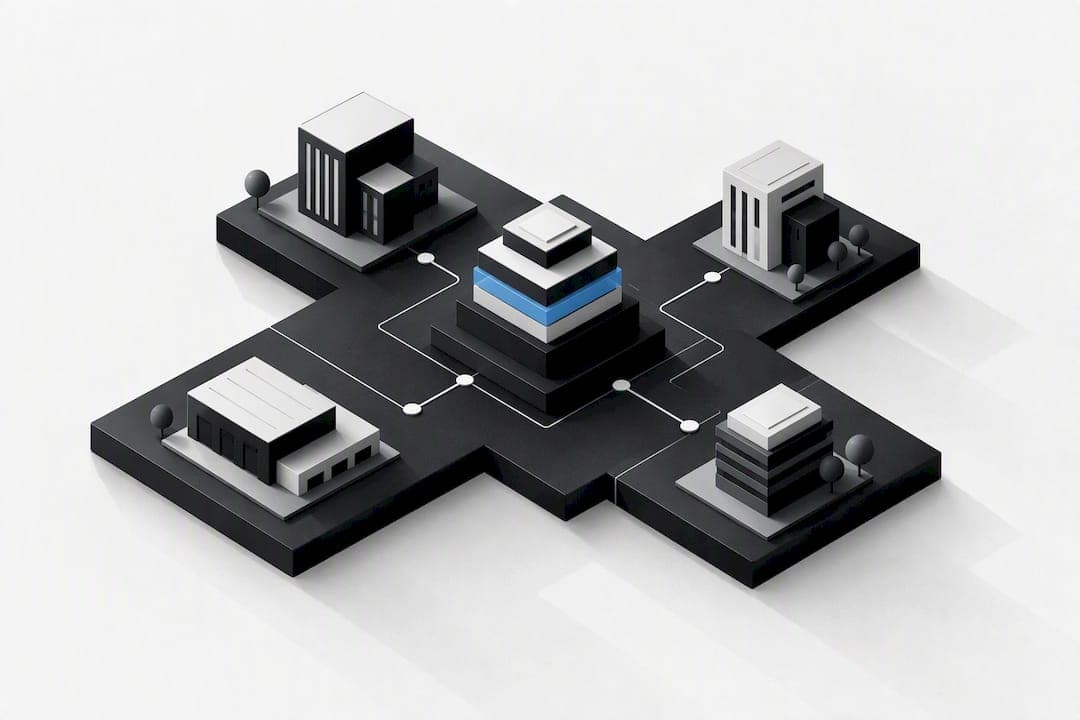
Multi company management means running several legal entities from one connected system instead of juggling separate tools for each. The practical goal is simple: keep each entity isolated for tax and legal purposes while centralising reporting, so you can close faster and automate intercompany eliminations rather than chasing them manually.
TL;DR:
- IFRS 10 requires a parent to present consolidated statements when control exists; under US GAAP, VIE and VOE models determine whether consolidation applies.
- ASC 810 requires intercompany balances and transactions to be eliminated; spreadsheets can miss unrealized profit on internal transfers, distorting margins and raising audit risk.
- A pilot involving one or two entities can yield usable results in four to eight weeks; reconcile its output with the manual process before rollout.
- Entity permissions must apply at the data request level, and BI access needs separate testing because reporting permissions can drift from transactional controls.
Table of Contents
- What multi-company management means and who needs it
- Why centralising reporting matters for finance teams
- Core components a multi-company system needs to provide
- How to centralise your entities step by step
- Keeping multi-entity data secure and audit-ready
- Why finance leaders should prioritise consolidation now
- How OK Technology supports multi-company consolidation
- FAQ
- Sources
What multi-company management means and who needs it
Multi company management keeps each business as its own legal book, with its own chart of accounts and tax identity, while sharing processes like CRM, billing and reporting across the group. The entities stay separate on paper, but the day-to-day work does not have to be duplicated across disconnected tools.
This setup shows up in a few common structures:
- Parent-subsidiary groups, where one holding company owns several operating entities
- Divisional organisations, where a single legal entity runs multiple business units
- Franchise networks, where each location is its own entity but shares brand and reporting standards
The people who feel the difference first are CFOs and controllers closing the books each month, operations managers trying to compare performance across sites, and IT or group leaders responsible for keeping data consistent and secure across the whole structure.
Why centralising reporting matters for finance teams
A faster close is the most immediate payoff. When entities feed into one reporting layer, finance teams stop waiting on spreadsheets from each subsidiary and get consolidated numbers on demand, with fewer manual reconciliations along the way.
There is also an accounting reason this matters, not just an operational one. IFRS 10 sets out the principles for preparing consolidated financial statements and defines when a parent must present them, which makes consolidated reporting a requirement rather than a convenience once control exists between entities. Under US GAAP, consolidation guidance uses the VIE and VOE models to decide whether consolidation applies, and once it does, intercompany eliminations become part of the ongoing process rather than a one-off exercise.

Automation changes what your finance team actually spends time on. Instead of assembling numbers from separate systems, controllers can review and analyse a consolidated view that updates as entities post transactions.
Core components a multi-company system needs to provide
Centralising operations only works if the underlying system is built for it. A handful of capabilities separate a true multi-entity platform from a single-company tool stretched across several books.
- A clear entity model with separate charts of accounts and tax IDs for each legal entity
- Automated intercompany transaction handling, with eliminations and a reconciliation trail you can audit
- Roll-up reporting that handles currency conversion and consolidation adjustments
- Master data management that stops the same vendor or customer being created twice under different entities
- Access governance that enforces entity-level isolation across both transactional systems and reporting or BI tools
- Selective data-sharing controls, so shared services or group branding can cross entities without breaking isolation elsewhere
Intercompany transactions deserve particular attention because they are where most reconciliation problems start. Under ASC 810, intercompany balances and transactions must be eliminated so the consolidated statements represent a single economic entity, not a sum of unrelated parts. Spreadsheets commonly miss unrealised profit sitting on internal transfers, which distorts margin analysis and creates audit risk that only surfaces later.
Master data fragmentation causes a similar problem on the operational side. Duplicate vendor records with inconsistent tax ID formats are one of the more common reconciliation headaches finance teams deal with, and they are largely preventable with validation rules applied at the point of data entry.
How to centralise your entities step by step
Centralising a multi-company structure works best as a sequence rather than a single project, and each step gives the next one something solid to build on.
- Map every legal entity, its reporting boundaries and any regulatory requirements specific to its jurisdiction.
- Standardise the chart of accounts across entities and enforce master data rules at the point of entry, not after the fact.
- Configure intercompany posting rules so transactions between entities generate automated eliminations rather than manual journal entries.
- Set entity-scoped access controls and make sure BI and reporting permissions match transactional access exactly.
- Run a pilot consolidated report, reconcile it against the manual process, and adjust before rolling out further.
A pilot covering one or two entities typically produces usable results within 4-8 weeks, while a broader rollout across a full group tends to take anywhere from three months to a year depending on the number of entities and how much legacy data needs cleaning first. Treat the pilot as a test of the rules, not a formality: reconciling against the old process is what tells you whether the automated eliminations are actually correct before you depend on them.
Keeping multi-entity data secure and audit-ready
Entity isolation has to work at the request level, not just on the screen. Security tokens scoped to organisation and entity IDs stop one entity's dashboard from leaking data that belongs to another, which is a gap that purely visual or UI-based filtering does not close.
Master data validation rules matter just as much. Enforcing consistent tax ID formats and catching duplicate records at creation, rather than during a quarterly clean-up, keeps your reconciliations accurate and reduces the work an auditor has to do to trust them.
Every intercompany elimination and reconciliation needs a full audit trail, not a one-line journal entry with no supporting detail behind it. That trail is what lets an auditor, or your own controller later, see why a particular elimination happened. Alongside that, it is worth testing your BI and reporting access on its own, separately from transactional access, since the two are often configured by different teams and can drift out of alignment over time.
Pro Tip: Automate intercompany eliminations as standing rules rather than manual entries, so your controllers spend their time analysing the consolidated view instead of assembling it.

Why finance leaders should prioritise consolidation now
Groups that consolidate well close faster and walk into an audit with answers instead of spreadsheets to reconcile overnight. That speed is not a side benefit: it is what lets a finance leader spot a problem in one entity before it shows up in later results.
Unified platforms cut the tool sprawl that makes reconciliation painful in the first place, and the cost of carrying disconnected systems compounds quietly over time. None of this needs to happen all at once. A single pilot, reconciled properly, tells you more than a full rollout plan ever will.
— Paolo
How OK Technology supports multi-company consolidation
Our platform supports multi-company isolation, so each entity keeps its own data and workflows while reporting, billing and CRM run from one connected system. Because we charge per action rather than per seat or tier, you pay for the invoices, leads and reports you actually generate across your entities, not for a licence sized to your largest one.

That structure tends to shorten reconciliation time because the data behind each entity's numbers already sits in one place rather than being pulled from separate tools each month. If you want to see what that looks like for your own group, our pricing page breaks down every action we bill for, or you can book a call to talk through your current setup.
FAQ
How do you manage multiple businesses at once?
You manage multiple businesses by keeping each one's legal and tax records separate while centralising shared processes like reporting, CRM and billing in one system. The key is enforcing entity isolation at the data level while still getting a consolidated view for decision-making.
Can one person be CEO of multiple companies?
Yes, a single person can legally hold the CEO title across several companies, including parent and subsidiary entities. Each company still needs its own governance, accounts and compliance obligations handled separately, even when leadership overlaps.
How does tax work if you run two businesses?
Each business is generally taxed as its own legal entity, filing its own returns based on its own income and expenses, even if you own both. Rules on consolidated tax filing vary by jurisdiction, so the exact approach depends on where each entity is registered.
What does multi-company mean in business software?
Multi-company in software means the platform can keep separate legal entities, each with their own accounts and data, isolated from one another while still supporting shared reporting or shared services. It is the technical foundation that lets a group consolidate its numbers without mixing entity-level records together.
Sources
For readers who want the underlying standards, IFRS 10 sets the principles for consolidated financial statements internationally, while the PwC consolidation guide and its intercompany transactions chapter cover US GAAP consolidation models and elimination requirements in detail. For reconciliation mechanics specifically, this automated reconciliation overview explains the process from a finance-operations angle.