
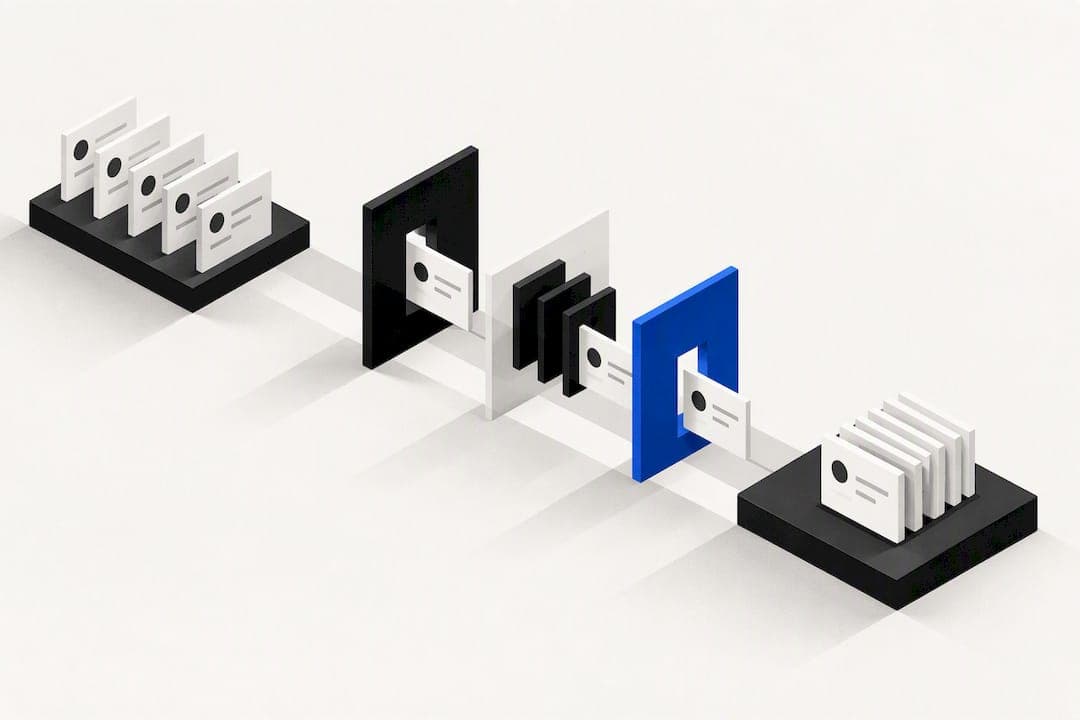
Lead generation automation moves a prospect from first contact to sales-ready conversation without manual handling at every step. It links capture, qualification, routing, nurture and measurement into one connected flow. The result is a steadier supply of better-qualified leads and faster follow-up. Before switching anything on, check two things first: how your tools integrate with each other, and what your routing defaults actually do.
TL;DR:
- Proper integration of capture, scoring, and routing tools is essential to prevent breaks in the lead qualification process and ensure timely follow-up.
- Using simple scoring models with a few trusted inputs is more effective than complex ones that are difficult to monitor and validate.
- Combining capacity, load, and availability rules for routing improves first-contact speed and workload balance across sales reps.
- Starting with a small pilot focusing on one lead source helps identify issues early and avoids widespread implementation problems.
- Fixing foundational pipeline mechanics such as validation, routing defaults, and SLAs is more impactful than relying solely on AI personalization features.
Table of Contents
- Core components and how they fit together
- Automated lead capture and qualification
- Lead assignment and routing rules: how to prevent leaks and balance workload
- Nurture workflows and automation tactics that convert
- Measurement, SLAs and optimisation
- Implementation checklist and best practices
- Publisher perspective: how OK Technology approaches lead generation automation
- What this guide gets right and what it leaves out
- How OK Technology can help: demo, pilot and pricing links
- Sources
- FAQ
Core components and how they fit together
Automation only works when each stage feeds the next one cleanly. Capture tools collect raw interest. Scoring tools rank that interest. Routing tools send it to the right person. Nurture tools keep the lead warm until someone is ready to act.
- Capture: website forms, paid ad leads, chat widgets and prospect crawlers all feed into one pipeline.
- Enrichment and scoring: firmographic and behavioural data get added, then a score decides priority.
- Routing: scored leads are assigned by rule, not by whoever is free first.
- Nurture: unassigned or not-yet-ready leads enter a sequence instead of sitting idle.
The weak point is usually integration. A form that does not write cleanly into the CRM, or a webhook that silently fails, breaks the whole chain before scoring or routing ever runs.
Automated lead capture and qualification
Capture quality decides everything downstream. A crawler that pulls public business or project data can widen your pipeline for B2B prospecting, particularly where tender or project listings are public, but it needs validation before those leads reach a rep, since raw crawler output is often noisy or out of date. Forms and ad leads need the same discipline: required fields, email verification and duplicate checks stop bad data at the door.
- Crawlers: useful for prospect discovery, but pair them with a validation step to protect SDR time.
- Forms and ad leads: reduce drop-off and junk entries with field validation and real-time email checks.
- Enrichment sources: firmographics, intent signals and third-party data append context automatically.
- Scoring: combine job title, company size, engagement and intent into a simple weighted score with a pass threshold.
Pro Tip: Start with three or four scoring inputs, not twelve. A simple model you actually trust beats a complex one nobody checks.
Lead assignment and routing rules: how to prevent leaks and balance workload
Routing rules decide whether a hot lead reaches someone within minutes or sits unassigned for a day. Assignment-rule guidance describes three common models and how combining them with availability data changes outcomes.
- Round robin rotates leads evenly across reps in sequence, which is simple but ignores workload differences.
- Load balancing checks how many open leads each rep already holds before assigning the next one, which smooths out uneven pipelines.
- Capacity-based assignment sets a maximum active-lead count per rep and stops new assignments once that cap is hit.
Every configuration needs a default assignee and an overflow path, so a lead never goes unassigned when no rep matches the rule. Combining capacity and availability windows, rather than round robin alone, tends to improve first-contact speed and cuts the risk of assigning leads to someone off-shift. A rule set that checks recent-assignment timestamps alongside capacity and schedule produces the most even, responsive distribution in practice.
Nurture workflows and automation tactics that convert
Not every lead is ready for a rep, and treating them all the same wastes both sequences and sales time. Map nurture tracks to score buckets: high scores get a fast, direct outreach sequence, mid-scores get a multi-touch email and SMS flow, and low scores get longer-interval content nurture.
- Trigger-based flows: fire on a specific action, such as a pricing-page visit, and suit buyers showing active intent.
- Time-based flows: run on a fixed schedule and suit early-stage leads who need education before a conversation.
- Short personalised touches: a one-line note referencing a specific page or download tends to lift response over generic templates.
- Escalation criteria: move a lead to a human the moment score crosses a threshold or a reply shows buying intent.
AI personalisation can draft these short touches at scale, but the escalation rule, not the copy, is what protects conversion, as explained in this partner perspective on building AI-native automations.
Measurement, SLAs and optimisation
Automation without measurement just moves the guesswork downstream. Track first-response time, lead-to-opportunity rate and conversion by source as a baseline set, since each exposes a different failure point in the pipeline.
- First-response time: the gap between capture and first human or automated contact.
- Lead-to-opportunity rate: the share of qualified leads that become real pipeline.
- Conversion by source: separates channels that produce real buyers from ones that just produce volume.
- Cost per action: ties spend directly to the specific step, such as a scored lead or a sent campaign, rather than a blended average.
The widely cited '5-minute rule' holds that promptly contacting a new lead soon after capture meaningfully improves the odds of reaching them. Track SLA adherence as a percentage of leads contacted inside that window, and test nurture or scoring changes one variable at a time so you know what actually moved the number.
Implementation checklist and best practices
Rolling out automation works best as a staged process rather than a single switch-over.
- Audit capture sources and fix duplicate fields, missing validation and broken integrations before anything else.
- Define scoring criteria with a small, trusted input set and a clear qualification threshold.
- Build routing rules, including a default assignee and an overflow path for unmatched leads.
- Set SLAs for first response and funnel conversion, and brief reps on what the automation does and does not cover.
- Run a time-boxed pilot, typically two to four weeks, against a defined success metric before rolling out fully.
- Review and iterate based on pilot results, adjusting scoring weights or routing rules rather than rebuilding from scratch.
Pro Tip: Pilot on one lead source first. A messy rollout across every channel at once makes it impossible to tell which rule actually worked.
Publisher perspective: how OK Technology approaches lead generation automation
OK Technology brings CRM, project management and marketing automation into one platform, which removes a common source of integration failure: the handoff between separate tools. The platform aims to save time otherwise spent managing disparate systems. Its pay-per-action pricing means a business pays for each lead, campaign send or document generated rather than a fixed monthly tier, which can suit teams whose lead volume varies by season or campaign.

What this guide gets right and what it leaves out

Most advice on lead automation focuses on scoring models and ignores routing, which is usually the bigger source of lost revenue. A lead that scores perfectly but sits unassigned for six hours has already lost most of its value. Get the default assignee and overflow rule right before spending time tuning score weights.
The other overrated piece is AI personalisation copy. It helps, but it cannot fix a slow first response or a broken webhook. Fix the pipeline mechanics first: capture validation, routing defaults, SLA tracking. Then layer in scoring refinement and personalised content once the basics hold up under real volume. Teams that automate in that order see steadier results than teams that start with the flashiest feature.
— Paolo
How OK Technology can help: demo, pilot and pricing links
If tool sprawl is slowing your lead response, a consolidated platform removes the handoffs that usually cause the delay. OK Technology combines CRM, routing, nurture and billing in one place, and its pay-per-action model means you pay per lead, campaign or document rather than for a seat you are not using.
- Integrated routing and CRM: leads move from capture to assignment without a separate sync step.
- Pay-per-action pricing: costs scale with actual usage, detailed on the pricing page.
- Consulting support: business and technical consulting is available by the hour for teams setting up rules for the first time.
Visit the OK Technology platform overview to see how the pieces fit together, or check current rates on the pricing page before running a pilot.
FAQ
What is a lead automation system?
A lead automation system is software that captures, scores, routes and nurtures prospects without manual handling at each step. It typically connects forms, ads and CRM data to assignment rules and follow-up sequences.
What is the 5-minute rule for leads?
The 5-minute rule says a new lead should be contacted within five minutes of capture to maximise the chance of reaching them and moving them forward. Many teams track adherence to this window as a core service-level metric.
How do you automate lead generation with AI?
AI can draft personalised outreach, score leads based on behavioural and firmographic signals, and trigger follow-up sequences automatically. It works best layered onto solid capture validation and routing rules rather than replacing them.
How much should you pay for lead generation?
Cost depends heavily on channel, volume and whether you pay per lead or per platform seat. Pay-per-action models, such as the CRM lead fees on OK Technology's pricing page, let you align spend directly with the leads actually generated.
What rules prevent leads from going unassigned?
A default assignee and an overflow path ensure every lead gets routed even when no specific rule matches. Combining round robin or load balancing with capacity and availability checks, as described in Microsoft's assignment-rule guidance, further reduces the risk of leads being missed.